
Neonatal Care Unit
Last updated: October 2026 · Information reviewed by Dr. K. K. Das, Founder, Surgy Centre, Bokaro Steel City (in surgical practice since 1977)
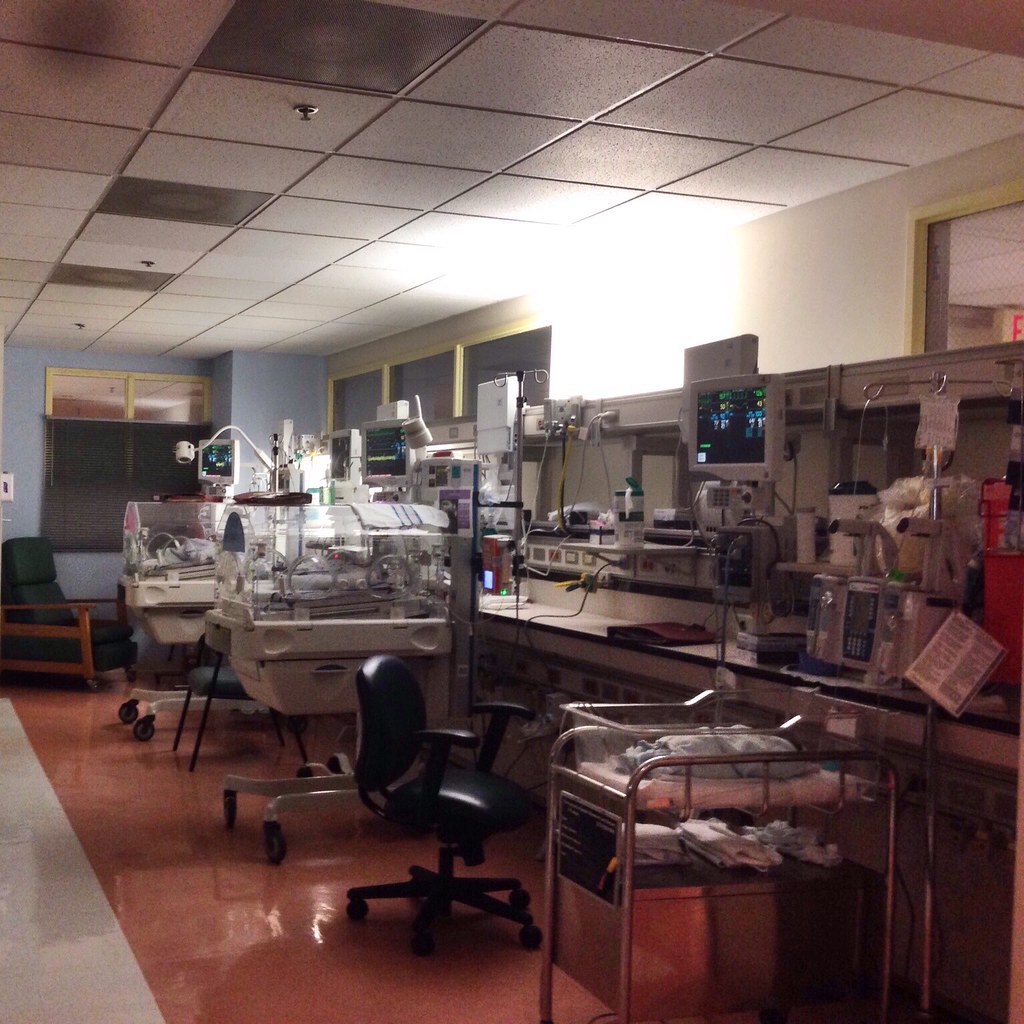 Dedicated NICU for premature and jaundiced babies
Neonatal Care Unit (NICU) — special care for newborns in Bokaro Steel City
A newborn’s first days decide a great deal — and for premature, low-birth-weight or unwell babies, those days need more than a cot and good intentions. The Neonatal Care Unit at Surgy Centre, Bokaro Steel City is a level-II special care nursery: monitored warming cots, oxygen support, phototherapy, trained neonatal nursing around the clock, and doctors who examine every baby in the unit every single day. Since Dr. K. K. Das founded the hospital in 1977, the unit’s purpose has not changed: babies born here — or brought here — get the care they need inside the building, with their mothers a corridor away rather than a referral letter away.
Expecting a baby or referred here with a newborn? Call 88770 88770 / 73710 50505 — the unit accepts babies 24×7.
Dedicated NICU for premature and jaundiced babiesWhich babies need the NICU?
- Premature babies — born before 34–35 weeks, whose feeding, temperature and breathing systems are not ready for the outside world
- Low birth weight — under 2–2.2 kg, even when born at term
- Birth asphyxia — babies who needed resuscitation at birth and close observation after
- Respiratory distress — fast breathing, grunting, in-drawing of ribs; needs oxygen and careful monitoring
- Neonatal jaundice beyond safe thresholds — treated with phototherapy under bilirubin surveillance
- Seizures, infections (sepsis), hypoglycaemia — medical emergencies specific to newborns
- Babies of diabetic or hypertensive mothers — watched for sugar, breathing and temperature instability in the first hours
- Twins and multiples — routinely observed even when well
Dedicated NICU for premature and jaundiced babiesWhat the unit provides
- Thermoregulation — radiant warmers and servo-controlled cots keeping babies in the narrow thermal band their survival depends on
- Feeding support — expressed breast milk by spoon, paladai or tube as needed, with mothers’ milk established by the nursing team; formula only when medically indicated, and never as a default
- Oxygen therapy — blended oxygen with saturation monitoring, escalating to referral-level support only when a baby’s needs exceed level-II scope — and that decision is made early and honestly
- Phototherapy — for jaundice, with in-house bilirubin testing (see Photo Therapy)
- Infection care — sepsis workups, antibiotics per protocol, and strict hand-hygiene discipline that visitors and staff both follow
- Monitoring — heart rate, breathing, oxygen saturation, temperature and sugar on monitored cots; babies are examined by doctors daily and whenever nursing flags a change
Dedicated NICU for premature and jaundiced babiesKangaroo care and the mother’s role
The unit’s most powerful “equipment” is the mother. Skin-to-skin kangaroo care — baby held upright on the mother’s chest, skin touching skin — stabilises temperature, breathing and weight gain better than most machines, and we practise it actively under nursing supervision as soon as a baby is stable enough. Mothers express milk on schedule, room nearby in our maternity wards, and are taught every skill their baby will need at discharge: feeding, cord care, bathing, temperature sense, and the warning signs that mean come back. Discharge is not the end of contact — follow-up visits track weight, feeding and development until the baby is thriving.
Dedicated NICU for premature and jaundiced babiesHonest boundaries — what we refer out
A level-II unit does not pretend to be level-III. Babies needing mechanical ventilation, major surgery, or intensive retrieval are stabilised here (oxygen, warmth, sugar, infection cover) and referred promptly to a tertiary centre with full documentation and our ambulance support (24×7 ambulance). Families are told early, not after hours of waiting — because in neonatal care, the right decision late is the wrong decision.
Dedicated NICU for premature and jaundiced babiesInfection control — the invisible discipline
Newborns fight infection poorly, so the unit runs on strict protocols: hand-washing at every entry, restricted visitors (parents only, healthy visitors only), dedicated equipment per baby where possible, sterile procedure technique, and antibiotic stewardship — we treat proven or strongly suspected sepsis properly, and we do not “just cover” every baby with antibiotics “to be safe”, because indiscriminate use breeds the resistance that kills newborns later. This discipline is the least visible and most lifesaving thing about a good unit.
Dedicated NICU for premature and jaundiced babiesCosts and transparency
NICU care is itemised daily — cot type, oxygen hours, medicines, monitoring — and families see the running bill on request, consistent with our written-estimate promise. Common questions (expected stay, what improves first, what the bill is doing) are answered plainly at the daily review. The unit’s rates are posted and identical day and night.
Dedicated NICU for premature and jaundiced babiesContact the unit
Surgy Centre, 225 Cooperative Colony, Bokaro Steel City, Jharkhand 827001. The unit accepts babies 24×7; OPD follow-ups Monday–Saturday 9 AM–12 PM and 3–6 PM. Phone: 88770 88770 / 73710 50505. Related: Photo Therapy · Body Warmer · Normal Delivery · All Treatments.
Dedicated NICU for premature and jaundiced babiesThe first hour of a NICU admission — what happens, in order
When a baby arrives needing the unit — from our labour room or by referral — the first hour follows a rehearsed sequence. Assessment (first minutes): breathing, colour, tone, temperature, sugar — the five vitals of newborn triage, measured and acted on immediately. Stabilisation: warmth on the radiant warmer, airway cleared, oxygen titrated to saturation, IV access where the baby needs medicines or fluids, the first glucose check (the small baby’s hidden emergency). Workup: the sepsis screen when infection is suspected (blood counts, cultures — with antibiotics started per protocol where the picture warrants), bilirubin when jaundice rides in, X-ray when breathing demands it. The family briefing: as soon as the baby is stable, the doctor sits with the parents — what was found, what is being done, what the next hours look like, and the honest range of outcomes. The mother’s line: expressed milk begins within hours wherever the baby’s condition allows — the feeding plan is part of the treatment plan, never a later detail. Families emerging from this hour usually describe the same thing: fear giving way to a plan. That conversion is the unit’s first job.
Dedicated NICU for premature and jaundiced babiesFeeding the small baby — the unit’s quiet discipline
No NICU therapy matters more than milk, and our feeding protocol is written accordingly. The milk is the mother’s: expressed breast milk is the feed of choice at every weight and gestation — the nursing team teaches expression on a schedule (every 2–3 hours, night included), storage and labelling per protocol, and the mother’s supply is protected as vigilantly as the baby’s temperature. Delivery by maturity: cup or paladai for the coordinated baby, gavage (tube) feeding for the preterm one — advancing volumes step by step, watching feeding tolerance daily. Supplements only by indication: human-milk fortifiers for the smallest, formula only where the mother’s milk is genuinely unavailable — and that decision documented with counselling, because formula-by-default is a unit’s character flaw, not a feeding choice. Kangaroo integration: skin-to-skin sessions beginning as stability allows (warmth, weight gain, bonding in one gesture). Discharge feeding: direct breastfeeding established before going home wherever possible, with weights and patterns demonstrating — not promising — that the baby thrives. The unit’s graduates are, overwhelmingly, breastfed babies: the statistic we court hardest.
Dedicated NICU for premature and jaundiced babiesJaundice in the unit — the escalation ladder in practice
Newborn jaundice runs our phototherapy beds seasonally, and the unit’s ladder for it is worth every family’s reading. Step one — measurement, not eyeballing: transcutaneous or serum bilirubin (laboratory, hours) plotted against age-in-hours thresholds — the chart that decides, not the yellowness anyone sees. Step two — standard phototherapy: the lights on, eyes shielded, feeding pushed, levels rechecked on schedule (the full protocol). Step three — intensive phototherapy: added surface area, stronger units, hydration support — for the climbing levels. Step four — exchange transfusion territory: the rare highest zone, where stabilisation and referral run in parallel — prepared early, never improvised late. The causes hunted meanwhile: blood-group incompatibility (the mother’s and baby’s samples meet in the lab), infection, the preterm liver’s slow start — each with its own treatment alongside the lights. The ladder’s point: every rung has a threshold, every threshold has a protocol, and no baby’s bilirubin is ever managed by hope. Kernicterus — the catastrophe phototherapy exists to prevent — has a simple biography: it happens where thresholds are guessed. Ours are measured.
Dedicated NICU for premature and jaundiced babiesTaking your baby home — the discharge checklist and the first week
Discharge is a protocol, not a date. The baby’s side: feeding established and demonstrated (direct breast where possible), weight trending on its curve, temperature stable in open cots, the treatment course completed or the home plan written, screening checks done, immunisation schedule charted. The teaching: feeding technique watched, not just told; bath demonstration; cord care; the temperature rules for Bokaro winters (layering, cap, no over-bundling); sleep position on the back; and the danger-sign list — poor feeding, lethargy, fever or cold hands-feet, fast breathing, yellow spreading palms-soles, fewer wet nappies — each with the instruction that means “come now”. The numbers: our emergency line (88770 88770) and the follow-up dates fixed before departure. The first week: the follow-up visit reviews weight, feeding and jaundice’s final tail; the mother’s own recovery is checked in the same visit (PNC), because the baby’s ecosystem deserves a check-up too. Graduates of the unit carry a heavier follow-up calendar — preterm babies get growth and milestone reviews at fixed intervals — because the discharge is the middle of the story, not the end.
Dedicated NICU for premature and jaundiced babiesFor grandparents and the wider family — the NICU etiquette
Indian newborns arrive with an entire extended family’s anxiety, and the unit’s visitor rules exist to convert that anxiety from hazard to help. The rules, explained: parents only inside the unit — every additional visitor is an infection exposure to every baby in the room, not just yours; healthy hands, no symptoms, no exceptions; celebration postponed to the homecoming. The roles that help: the grandmother managing the household so the mother can rest and express milk; the uncle driving the milk samples and reports; the aunt feeding the household so vigils are staffed by the rested. The questions that help: directed to the morning briefing (the doctor’s daily update time), written down before asked, and never at 3 AM for items the morning can answer. The customs we respect and the line we hold: the home-arrival rituals belong to families; the unit’s hygiene belongs to medicine — we honour both by keeping them in their places. The wider family’s patience during those weeks is a form of treatment the baby receives; the unit’s rules are simply its shape.
Dedicated NICU for premature and jaundiced babiesMore Diagnostics & Care



Need a consultation or second opinion?
Book your appointment online or call us directly — our team will confirm your slot within minutes.