
Clinical Haematology
Clinical Haematology — blood count and disorder testing in Bokaro Steel City
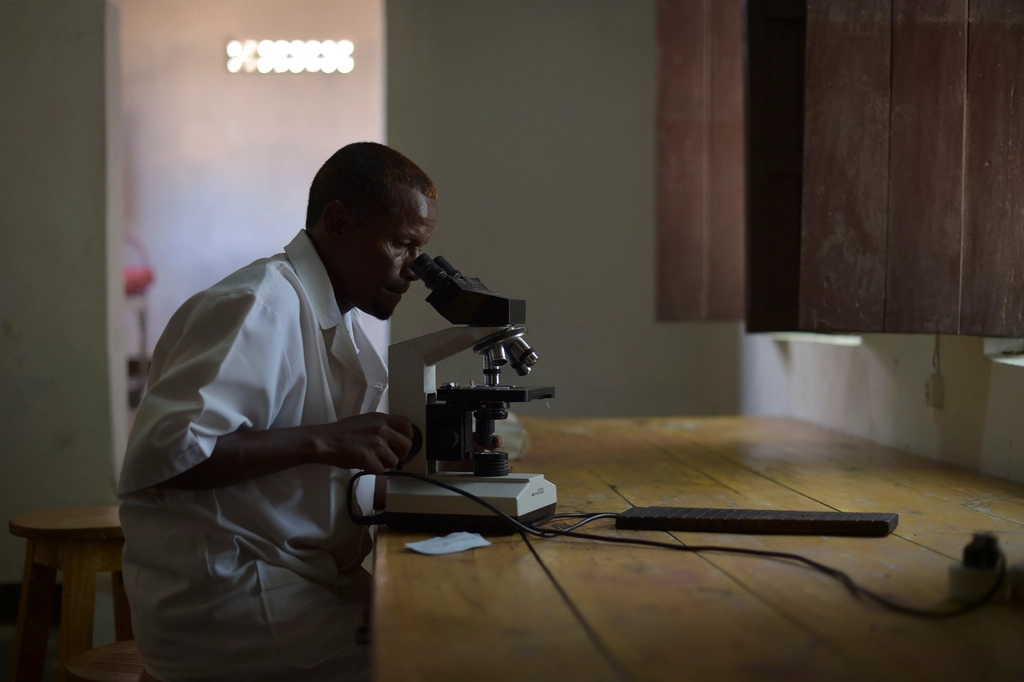
Haematology is the study of blood itself: the red cells that carry oxygen, the white cells that fight infection, the platelets that stop bleeding. It is the section of our in-house laboratory that answers the questions doctors ask most often — “Is she anaemic? Is this infection bacterial? Are the platelets falling? Is this patient fit for surgery?” — with automated cell counters, trained technologists and doctor-level review of every abnormal result. From the anaemia that shadows most Indian women through pregnancy, to the dengue seasons that make platelet counts a household word in Bokaro, haematology is where a great deal of medicine actually begins.
Samples collected during OPD hours (Monday–Saturday 9 AM–12 PM and 3–6 PM); CBC reports in hours, same day. Emergency processing 24×7 for admitted patients. Call 88770 88770 / 73710 50505.
The Complete Blood Count (CBC) — what each number means
A CBC costs little, takes minutes, and rules in or out half the diagnoses in general medicine — the best value in laboratory medicine.
Anaemia — the region’s quiet epidemic
Most women and many men we test are anaemic to some degree: heavy periods, poor dietary iron, frequent pregnancies, worm infestations and chronic disease stack the deck. The consequences are real — fatigue that gets blamed on “weakness”, breathlessness blamed on age, and dangerous tolerance of haemoglobins that should have been treated years ago. Our approach: identify the type through indices and peripheral smear, treat the cause (iron, B12/folate, or referral for bone-marrow problems), and follow the count to a genuine normal — not just “a bit better”. Pre-operative anaemia is corrected before planned surgery rather than discovered on the table; pregnant mothers in our ANC programme are monitored and supplemented on schedule, with transfusion available for severe cases through blood bank support.
Fever panels — the seasonal reality of Jharkhand
Combined with the CBC, these panels let our doctors separate the dangerous fevers from the self-limiting ones early — the decision families actually need.
Coagulation and pre-surgical testing
Before any operation — from laparoscopic surgery to delivery — bleeding profiles (BT/CT, PT/INR, APTT where indicated) confirm that clotting is normal, and platelet counts confirm safety for anaesthesia and incision. Patients on blood thinners need protocol-specific timing; our counter asks the right questions. For mothers delivering with us, baseline grouping and antibody screening are part of the admission panel — routine until the rare moment they are decisive.
Beyond routine — when blood itself is the disease
Unusual counts trigger the right escalation: peripheral smear review by the pathologist, reticulocyte counts, haemoglobin electrophoresis for thalassemia suspicion, and referral to haematology centres for bone-marrow-level diagnosis. What we promise is honesty at the edge of our scope — the CBC that looks like leukaemia is not “observed”; it is referred the same day with the report in hand.
Quality practices
- EDTA tubes with correct fill volumes — underfilled tubes distort every count
- Mixing and transport discipline; samples analysed within validated time windows
- Daily instrument calibration with control samples before patient reporting
- Manual smear review of every flagged sample — machines miss what the microscope shows
- Critical-value protocol: dangerously low haemoglobin, platelets or counts are phoned through immediately
Give your sample
Laboratory inside Surgy Centre, 225 Cooperative Colony, Bokaro Steel City, Jharkhand 827001. Collection Monday–Saturday 9 AM–12 PM and 3–6 PM; emergency 24×7. Phone: 88770 88770 / 73710 50505. Related: All Laboratory Services · Biochemistry · All Treatments.
Anaemia typing — why “haemoglobin low” is the beginning, not the answer
Treating anaemia without typing it is like treating fever without finding its cause — sometimes right by luck, usually wrong. The CBC’s indices do the sorting: microcytic (small pale cells) — iron deficiency, the region’s champion, or thalassemia trait wearing iron-deficiency’s clothes (the difference changes treatment: iron harms the thalassemia carrier’s stores over time); macrocytic (large cells) — B12 or folate deficiency, the vegetarian household’s classic, or thyroid hiding underneath; normocytic (normal-sized but few) — recent blood loss, chronic disease, kidney whispers. The peripheral smear adds the cytologist’s eye; the history adds the rest — heavy periods, the diet that never contained greens, the worms, the piles quietly bleeding for years. Treatment then aims at the cause: iron with the absorption tricks (empty stomach, vitamin C, no tea-chasing), B12 injections where stores are empty, the gynaecological source treated (clinic, surgery where the uterus is the culprit), and the recheck that confirms a real normal — because “slightly better” is how anaemia becomes a decade-long companion.
Dengue season — the platelet diary families should keep
Every monsoon converts platelet counts into household vocabulary, and the season rewards families who understand the actual rules. The natural course: dengue’s platelet suppression is temporary; counts fall through the febrile days, trough around the fever’s end, and recover without medicine — the “platelet-raising” potions sold at counters have no evidence and some harm. What actually matters: hydration (the real danger of dengue is plasma leakage, not the platelet number itself), the warning-window vigilance (days 3–7: severe abdominal pain, persistent vomiting, bleeding gums, restlessness, cold clammy skin — each means immediate hospital, whatever the count), and the testing rhythm — CBC daily through the critical window at our laboratory, with the haematocrit read alongside the platelets (the leak announces itself in the haematocrit’s rise). Transfusion rules: platelet transfusion is reserved for genuine thresholds with bleeding — not for frightened numbers alone; our paediatric and medical teams apply the criteria the guidelines write, not the market’s. Families keeping this diary — counts, hydration, warning signs — navigate the season safely; the ones sold potions navigate the pharmacy.
Before every operation — the haematology gate
No patient reaches our operating theatre without the haematology review, and the review earns its place daily. Haemoglobin: corrected before elective surgery (transfusing on the table is harder than before it — blood bank coordination happens pre-op where needed); platelets: adequate for incisions and anaesthesia — low counts are investigated, not waved through; coagulation profile: BT/CT, PT/INR where indicated — the bleeding-history questions asked every time (“do you bleed long after cuts? any past surgery bleeding? any family history?”), because the questionnaire catches what the normal baseline misses; the blood-thinner conversation: which tablets stop, when, and under whose instruction — aspirin and clopidogrel have calendars of their own, and the anaesthetist owns that calendar. Group and save: blood group with antibody screen filed for every surgical admission — routine until the one night it is decisive. This gate adds a day to nobody’s surgery and has subtracted disasters from every decade of ours; it is the least dramatic and most valuable half-page in the entire surgical file.
Thalassemia and haemoglobinopathies — the inherited anaemias of our region
Our districts carry thalassemia genes quietly through generations — carriers (trait) live normal lives with mild anaemia that iron tablets never fix and shouldn’t be given for; the rare homozygous child faces transfusion-dependent life. The laboratory’s role: recognising the pattern — the microcytic anaemia with high iron that refuses the deficiency story, the family history of ” anaemia that never improved”; confirming with electrophoresis — the definitive test, arranged through our pathways; counselling the carrier couple — the marriage-and-pregnancy conversation Indian families need done without stigma: if both partners are carriers, each pregnancy has a one-in-four chance of the major form, and prenatal diagnosis is available and legitimate. The antenatal connection: our ANC programme flags the suspicious CBC early, tests the husband, and counsels before the options narrow. The single sentence every Bokaro family should carry home: if your “anaemia” never improved with iron, get typed before the wedding, not after — one electrophoresis answers for a lifetime.
Clotting and bleeding — the balance the laboratory watches
Blood’s great trick is flowing and clotting on command, and its tests read both directions. The bleeding side: prolonged BT/CT, low platelets, factor problems — investigated when the history tells (childhood bleeds, family patterns, the knee that swelled after school injuries); haemophilia suspects are referred to specialist centres with our workup completed. The clotting side: the woman on hormonal pills with calf pain, the post-operative patient with sudden breathlessness, the long-flight traveller’s swollen leg — D-dimer and coagulation panels feed the referral pathways that treat clots before they travel. The medicine monitors: warfarin patients living by their INR (tested at the rhythm the clinic sets, doses adjusted to the number), heparin coverage in hospital, the new oral anticoagulants’ occasional checks. The section’s closing truth: bleeding and clotting problems are rare but spectacularly treatable when caught — the laboratory’s job is making sure neither announces itself through a disaster before it announces itself through a number.
Need a consultation or second opinion?
Book your appointment online or call us directly — our team will confirm your slot within minutes.