
Blood Bank (Outsourced)
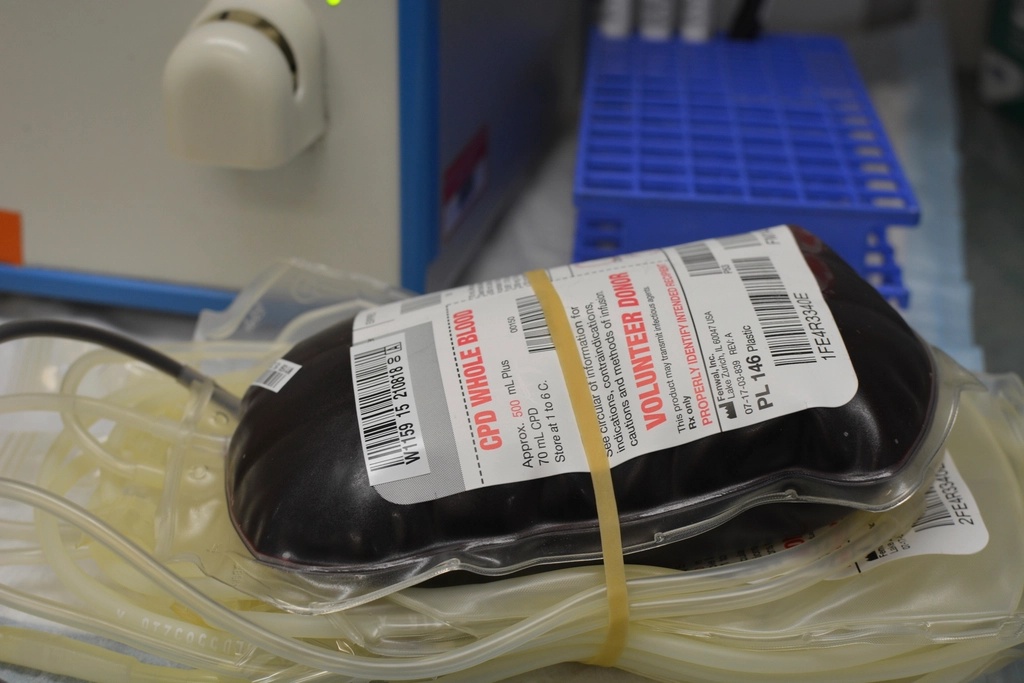
Blood Bank Support — safe transfusion backup at Surgy Centre, Bokaro Steel City
Blood is the one medicine no pharmacy can manufacture — it exists only because donors give it. For a surgical and maternity hospital, transfusion readiness is not an administrative detail: a bleeding patient at 2 AM cannot wait for a blood bank to open, and an anaemic mother in labour cannot negotiate for a unit. Surgy Centre, Bokaro Steel City maintains round-the-clock blood bank support through our dedicated outsourced partner blood bank, ensuring that grouping, cross-matching and compatible blood reach the operation theatre or labour room in the minutes that matter. Since Dr. K. K. Das founded this hospital in 1977, no emergency here has been lost to the absence of blood — that is the standard this arrangement exists to keep.
Queries about blood for a patient, or about donating: 88770 88770 / 73710 50505.
How our blood bank support works
When transfusion becomes necessary
For planned surgery — the family’s guide
Most routine operations with us need no transfusion at all; where the risk profile warrants standby, families are told at the pre-operative consultation — never surprised on the day. Guidance covers: whether replacement donation is suggested for the procedure, who in the family can donate (age 18–65, weight above 45–50 kg, recent illness-free, haemoglobin-qualified), the window for donation (units have shelf lives — fresh is not better; properly stored units are excellent), and the documentation the blood bank needs. Anaemia is corrected pre-operatively through our haematology pathway wherever possible — the best transfusion is the one the patient doesn’t need.
Blood donation — the two minutes that save four lives
Every eligible reader should know how simple donating is: 350–450 ml drawn over 5–10 minutes from a healthy adult (18–65 years, above 45–50 kg, haemoglobin qualified on a finger-prick check), replaced by the body within days, plasma within hours. Donors rest with refreshments and walk out unchanged — the recipients walk out alive. Eligibility screening protects both sides: infections, recent surgeries, pregnancy, low haemoglobin or weight defer donors temporarily or permanently, per national rules. Our partnered blood bank runs screening camps and accepts walk-in donors — call 88770 88770 for donation timings. Families of our patients are encouraged to donate in the patient’s name: replacement culture keeps regional banks stocked, and it is how the system stays alive for the next emergency.
Safety — the non-negotiables
Contact for blood queries
Surgy Centre, 225 Cooperative Colony, Bokaro Steel City, Jharkhand 827001. Emergency blood coordination 24×7: 88770 88770 / 73710 50505. Related: Support Services · Laboratory · Clinical Services.
Blood groups and matching — the science behind the plastic bag
The transfusion’s safety lives in its matching steps, and the steps deserve daylight. Grouping: ABO and Rh determined by direct testing — the four-minute identity check that every admission panel carries. Antibody screen: the patient’s plasma tested against standard cells — catching the unusual antibodies (from past transfusions, pregnancies) that group-matching alone would miss. Cross-match: the donor’s actual unit tested against the patient’s actual sample — the final compatibility proof before anything is issued; in emergencies, the least-incompatible O-negative protocol runs while the full match catches up. The bedside verification: two people, two identities, one label — checked at the vein itself, the step that catches the filing errors no laboratory can. After the transfusion starts: the first fifteen minutes watched closely — the reaction window; temperature, pulse and comfort noted per protocol. The honest rare risks: mismatch (near-impossible with the system above), transfusion-transmitted infection (screened to national mandate), and the mild febrile reactions treated symptomatically — every risk on this list is smaller than the bleeding the transfusion answers. Families watching a transfusion should know what the checks are: not ceremony, but the layered arithmetic that makes “a bag of someone else’s blood” the safest medicine in the building.
Who can donate, who should wait — the eligibility table in plain words
The donation questionnaire protects donor and recipient equally; here is the plain-language version. Can donate: age 18–65, weight above 45–50 kg, haemoglobin passing the finger-prick check, feeling well on the day, no fever in the past week. Temporarily deferred (wait, then give): recent infection or antibiotics (2 weeks), dental work (a week), tattoo or piercing (6 months), alcohol in the last 24 hours, major surgery (6 months), pregnancy or recent delivery and breastfeeding (a year-plus per protocol), vaccination windows per vaccine type. Permanently deferred (protect others by not giving): positive tests for HIV, hepatitis B or C; certain heart conditions; some chronic blood disorders; insulin-dependent diabetes with complications — each ruled for the recipient’s safety and the donor’s own health. The haemoglobin check: the drop of blood before the needle — the commonest deferral in our region is the willing donor with low haemoglobin (usually anaemia needing treatment, itself a useful discovery). The honest arithmetic: the deferral is not rejection — it is the system working; the deferred donor is counselled, treated where needed, and welcomed back at the next window. Blood is medicine only when both sides of the bag are healthy — the questionnaire is how the medicine stays medicine.
After donating — the body’s arithmetic and the donor’s day
The donation’s aftermath is simpler than donors fear, and knowing it recruits the next donation. The volumes: 350–450ml given — under a tenth of the body’s blood; the plasma replaces within hours, the cells over weeks, the iron drawn from stores over a month or more. The immediate hour: the refreshments and the ten minutes seated — the juice-and-biscuits ritual is physiology, not courtesy (it replaces fluid and sugar while the circulation adjusts); the needle-site pressure and the plaster; no heavy lifting with that arm for hours. The rest of the day: normal activity, extra water, a good meal; the gym and the heavy labour deferred to tomorrow. The iron conversation: regular donors — especially women — keep their haemoglobin topped with iron-rich food or a supplement course per advice, checked at the next donation’s finger-prick. The honest side-effects: occasional brief dizziness (sitting solves it), the occasional bruise (fades in a week) — the serious reactions are rarer than road-crossing accidents. The frequency rules: men every three months, women every four — the calendar of the habitual donor. The meaning: one donation can be separated into red cells, plasma and platelets — three patients per act, the arithmetic that makes donation the highest-yield kindness in medicine. The body replenishes; the recipient’s family never forgets; the donor walks out in twenty minutes carrying all of it.
When blood is short — how emergencies are triaged and families can help
Blood banks live with scarcity, and honest pages describe the rationing logic. The priority ladder in a shortage: the exsanguinating emergency first (the ruptured ectopic, the bleeding delivery — the minutes-to-death cases), then the urgent surgeries, then the transfusion-dependent chronic patients whose cycles are scheduled around the stock. What the family is asked: in replacement-donor situations, to arrange donors from their circle (the eligibility table above in hand) — the system that keeps regional banks stocked without commercial blood ever entering it; the blood bank desk coordinates the paperwork and timing. What the hospital does: our surgical protocols minimise transfusion need itself — cell-salvage where appropriate, iron-corrected patients before elective surgery, tranexamic acid where protocols support it — the best blood is the one the patient never needs. The myths to retire: “blood can be bought from the market” (commercial donors are illegal and dangerous — the ban is why you are alive), “hospital blood is old blood” (shelf-life is engineered and tested; fresh-off-the-street is not a virtue). The permanent fix: the voluntary donor culture — the colleague who gives twice a year, the college camp, the family’s birthday donation. Every reader eligible and willing holds the fix; the blood bank’s phone (88770 88770) converts it into three lives.
Transfusion in pregnancy and newborns — the special cases
Two populations make transfusion medicine unusually delicate, and both pass through this hospital’s doors nightly. The obstetric patient: anaemia in pregnancy is corrected before delivery wherever the calendar allows (transfusing an elective case is harder than preparing one); the delivery itself carries group-and-screen as routine; the caesarean or the postpartum haemorrhage activates the emergency pathway — matched units, the drugs, the theatre; and the Rh-negative mother gets her anti-D at the right moments so the next baby is protected. The newborn: tiny volumes, tiny veins, tiny margins — paediatric-compatible units, the exchange-transfusion pathway for the rare bilirubin emergency (the ladder that ends there), and the top-up transfusions the premature baby’s counts sometimes call for. The unmatched patience of both: every unit for these patients is cross-matched twice and checked at the bedside twice — the arithmetic tolerates no shortcuts at either size. What families should know: the antenatal grouping test, the delivery’s blood standby, and the newborn’s screening are not paperwork — they are the quiet half of the safety that delivery wards advertise as “24×7 blood available”, and this hospital means those words with a working phone number behind them.
Need a consultation or second opinion?
Book your appointment online or call us directly — our team will confirm your slot within minutes.