
Ambulance (Outsourced)
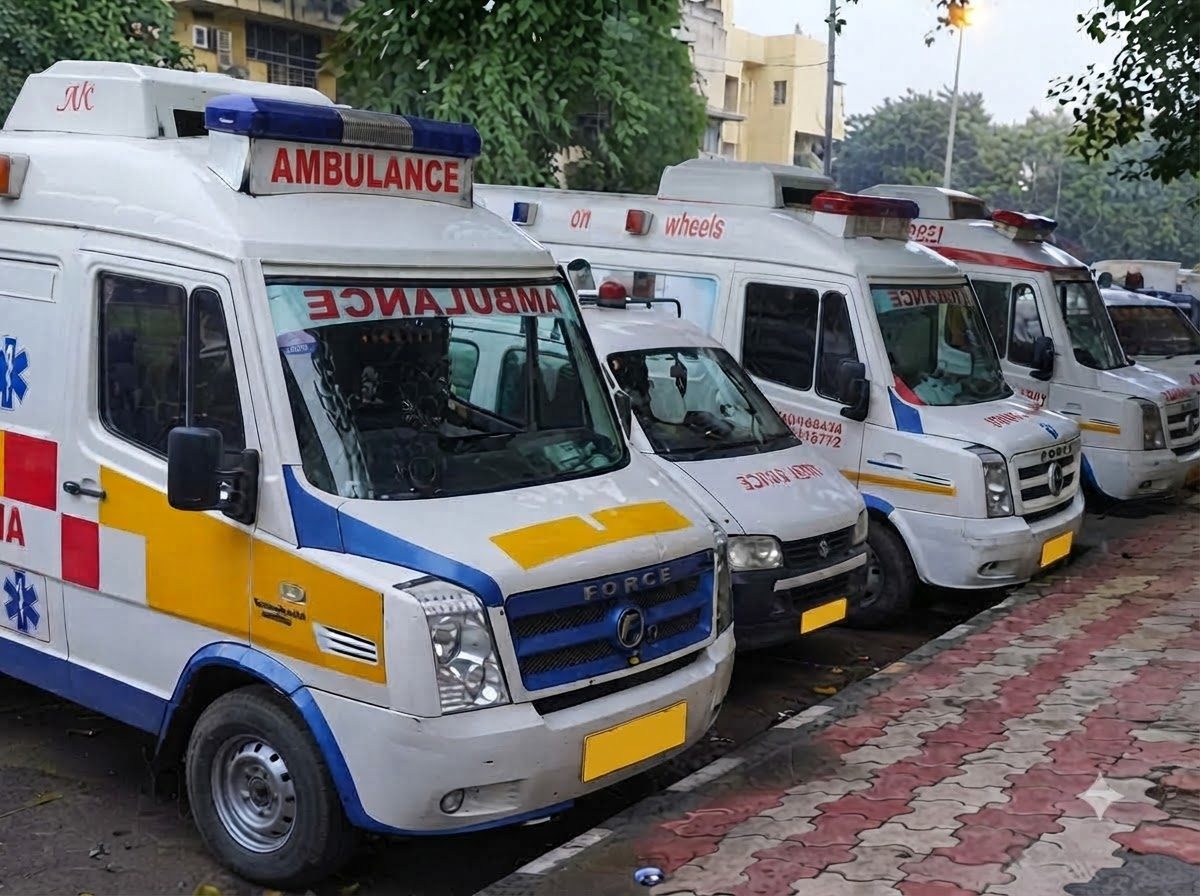
Ambulance Service (24×7) — emergency transport in Bokaro Steel City
In an emergency, the ambulance is the first hospital a patient enters — and the care given during those minutes shapes everything that follows. Surgy Centre’s ambulance service, operated round the clock by our dedicated outsourced partner, serves Bokaro Steel City and the surrounding districts: every vehicle reaches patients with oxygen aboard, a trained attendant, and direct radio/phone coordination with our emergency desk, so that the moment the patient boards, our doctors already know the case. Since Dr. K. K. Das founded this hospital in 1977, the rule has stayed unchanged: the ambulance rolls first, questions follow.
Emergency: call 88770 88770 or 73710 50505 — any hour, any day. Give the location landmark, the patient’s condition, and your phone number; stay on the line — the desk guides you through what to do while the vehicle moves.
When to call the ambulance
When in doubt, call and describe — the emergency desk will tell you whether to wait for the ambulance or come by other means. Wrong-side caution kills more than wrong-side optimism: for stroke symptoms, chest pain, heavy bleeding or a fit, calling is always correct.
What to do while the ambulance comes — the five-minute guide
The ambulance and its crew
Our partner’s vehicles carry: oxygen cylinder with delivery apparatus, first-aid and haemorrhage-control kit, spine board and stretcher, blood-pressure and saturation monitoring, and a trained attendant who manages the patient en route. The driver knows the city’s lanes and the hospital’s ramp — and the emergency desk tracks the vehicle’s approach while preparing the resus bay, OT or labour room for the patient’s arrival. This coordination is why families from Chas, Balidih, Sector areas, Bariatu and beyond call us first: the ambulance is not a taxi with a siren; it is the hospital’s first room.
Coverage and charges
Coverage: all of Bokaro Steel City (every Sector, Cooperative Colony, City Centre, Chas, Balidih, Nayamod, Bariatu, Marar) and nearby areas — Bermo, Petarwar, Jaridih, Kasmar, Gomia and neighbouring localities; inter-district transfers to Dhanbad, Ranchi or beyond are arranged case by case.
Charges: distance- and time-based, posted rates confirmed on the call — no surge pricing, no night multipliers sprung on a panicked family. Emergency dispatch is never delayed over payment questions; billing follows care, as with everything at this hospital since 1977.
Coordination with our emergency services
The ambulance lands into a hospital already prepared: our laboratory and ultrasound run 24×7 for the workup that begins on arrival; the operation theatre is readied for emergency surgery while the vehicle is en route; the labour room and NICU stand ready for obstetric arrivals; blood bank support is alerted for bleeding cases. One call mobilises the chain — that integration is the entire point of bringing patients here rather than to a standalone clinic.
Save the number today
Emergencies are never scheduled; the family that has the number saved calls in seconds. 88770 88770 / 73710 50505 — Surgy Centre Emergency & Ambulance, 225 Cooperative Colony, Bokaro Steel City, Jharkhand 827001. Related: Emergency & Clinical Services · Support Services · Contact.
The first five minutes — a phone-call script that saves time
The emergency call decides speed; here is the script our desk wishes every caller knew. First sentence — the location: landmark plus town — “near Shiv Mandir, Sector 4-B, Bokaro” beats an address the driver must decode; if the caller is unsure, the nearest big shop or chowk works. Second — the patient: age, sex, and the one-line emergency — “sixty-year-old man, chest pain and sweating”, “twenty-two-year-old woman, eight months pregnant, bleeding”. Third — the status: conscious? breathing? bleeding visible? — the three answers the desk dispatches on. Fourth — your callback number, repeated once. Then stay on the line: the desk gives first-aid while the vehicle moves — pressure on the wound, nothing by mouth, the recovery position, the car-seat for the chest-pain man. While waiting: gates opened, lift held, the stairs lit, documents and reports grabbed into one bag, one person deputed to wave the ambulance in. What NOT to do: no feeding (“he needs strength” is how aspiration happens), no driving the patient yourself in panic (two emergencies on the road), no crowd around the patient. The honest note: a confused caller costs two minutes; this script costs one. Families should photograph it into the phone gallery today — the emergency it serves will not send an invitation.
Inside the ambulance — what happens between your door and our bay
The ride is not transport; it is the first chapter of treatment. The crew’s assessment (first minutes aboard): airway, breathing, circulation — the ABC check that orders everything else; vitals measured, the story re-taken from the family in three sentences. What the vehicle delivers: oxygen titrated to the patient’s saturation; the bleeding controlled with proper dressings and pressure; the fracture splinted before the potholes find it; the unconscious patient positioned safely; the pregnant mother monitored for the delivery-that-cannot-wait — the crew has delivered babies on this stretcher before and remembers every protocol. The radio home: the driver and attendant stay in contact with our emergency desk — age, condition, ETA — so that the bay, the laboratory, the ultrasound and the theatre are preparing while the wheels turn. The family aboard: one attendant in front, briefed to stay clear of the crew’s hands and answer, not ask, questions until the bay. The honest limits: a road ambulance stabilises and delivers — it does not perform surgery; every minute of its care exists to land the patient at the hospital in better shape than it found them. The families who understand this ride’s seriousness — lights on, seatbelts fastened, phones silent — give the crew the silence the patient’s pulse needs.
Which hospital? — the question the family must answer correctly
The ambulance’s greatest service is sometimes the advice not to board it in the wrong direction. Come here when: the emergency is surgical (bellies, injuries, pregnancy catastrophes), obstetric, newborn, or fever-with-danger-signs — our theatre, labour room, NICU, laboratory and blood support run 24×7 behind the bay. Go to a bigger centre when — and we will say so on the call: the emergency is cardiac with arrest, a major head injury with coma, a stroke inside its golden window, or a multi-trauma needing interventional radiology — the cases that need facilities we honestly do not carry; our desk will route you to the right trauma/tertiary centre while stabilising en route if you are already aboard. The deliberate honesty: a hospital that sweeps every emergency toward itself for turnover wins the night and loses the patient; our emergency desk has held this line for decades, and the city’s doctors know it. The practical takeaway for families: when in doubt, call and describe — the desk’s first job is triage, its second is the ambulance, and it would rather spend two minutes directing you truly than twenty minutes treating you wrongly. The map of “which emergency belongs where” is drawn by this page; save the numbers of both before the night asks.
Planned transport — the ambulance beyond emergencies
Between emergencies, the same vehicle and crew serve the quieter bookings, and knowing them helps families plan. The discharge transfer: the post-operative patient who cannot manage a car — stretcher, oxygen, the crew that lifts properly; booked the evening before discharge through the ward. The inter-hospital referral: the baby needing the level-III NICU, the patient headed to Ranchi’s specialists — our ambulance delivers them with notes, images and the phone call ahead, so the receiving bay expects the case. The planned admission: the elderly patient, the immobile patient, the scheduled surgery family with no vehicle — the morning pickup booked like an appointment. The diagnostic run: the dialysis-dependent or wheelchair-bound patient’s regular city trips, arranged case by case. The economics: planned transport charges by distance and time at the posted rates — booked transport is usually cheaper than emergency dispatch, and always calmer. The one rule that never changes: emergencies displace bookings without apology — the vehicle that was coming for your Tuesday discharge will turn to the Friday-night emergency without hesitation, and the desk will re-book you with the same courtesy. The ambulance is one fleet serving two clocks; the city is better for both.
The crew — who rides with your family at 3 AM
The ambulance crew deserves its introduction, because families trust them with the worst hours of their lives. The driver: twenty years of Bokaro’s night roads in his reflexes; he knows which flyover floods, which chowk jams at festival time, and exactly how fast a stretcher can travel without hurting the patient it carries. The attendant: trained in first aid, oxygen delivery, bleeding control, and the art of the calm voice — the person holding the patient’s hand while the city rushes past; several of our partner’s crew have served longer than some of our machines. The coordination desk: the voice on the phone that never panics, dispatches in minutes, and stays on the line while the family trembles — the emergency system’s unseen first responder. The training behind them: regular refreshers in CPR, trauma handling, obstetric emergencies and newborn care; the equipment checklist signed at every shift change; the debrief after every hard run. What we ask of families in return: the respect of clear information, the patience of one attendant aboard, and the courtesy of not directing the driver. These three ride into other people’s worst nights every shift, and they bring the hospital’s first room with them — the least a family can offer is the road and the trust.
Need a consultation or second opinion?
Book your appointment online or call us directly — our team will confirm your slot within minutes.