
Caesarean Section
Caesarean Section (LSCS) — safe, planned and emergency C-section care in Bokaro Steel City
A caesarean section — the surgical delivery of a baby through the mother’s abdomen — is one of the oldest and most reliable operations in medicine. Done for the right reasons, it saves mothers and babies every single day; done for the wrong ones, it exposes families to avoidable cost and risk. At Surgy Centre, Bokaro Steel City, our approach since 1977 has been consistent: recommend a caesarean when it is genuinely needed — planned or in an emergency — and support normal delivery whenever it is safely possible. Dr. K. K. Das and our obstetric team have performed thousands of LSCS procedures in our own operation theatre, with anaesthesia, transfusion and newborn care available under the same roof.
This page explains when a caesarean is advised, how the operation is done with us, what recovery honestly feels like, and the questions mothers most often ask. For maternity registration call 88770 88770 / 73710 50505 or use our booking form.
When is a caesarean recommended?
Planned (elective) caesarean — decided before labour
Emergency caesarean — decided during labour
In our experience the most common causes in Bokaro are previous caesareans, foetal distress and labour that stops progressing. The decision is never taken lightly, and the reason is always explained to the family before surgery whenever the situation allows — in a true emergency, saving the baby comes first and explanations follow.
The operation — how it is done at Surgy Centre
Recovery — the honest timeline
The two things mothers most under-appreciate: pain relief works when taken on schedule (do not “bear it”), and a caesarean is major abdominal surgery — six weeks of sensible caution is not weakness, it is wisdom.
Future pregnancies after a caesarean
Two or three caesareans are generally considered the prudent lifetime maximum because each adds scar tissue and raises placental risks. Whether the next delivery can be vaginal (VBAC) depends on the original reason, the interval between pregnancies and this pregnancy’s course — we assess each case honestly. A pregnancy soon after a caesarean deserves early registration through our ANC programme so the scar and placenta position are monitored from the first trimester.
Safety, risks and our protocols
Caesarean risks — bleeding, infection, clots, injury to nearby organs, and anaesthesia problems — are low and manageable when the operation is planned and supported properly. Our safeguards include spinal anaesthesia where possible (avoiding general-anaesthesia risks), antibiotic prophylaxis on schedule, early mobilisation, thrombosis-prevention injections for higher-risk mothers, and 24×7 availability of blood through blood bank support. Mothers with diabetes, anaemia or high blood pressure are optimised before elective surgery through combined medical-obstetric planning.
Costs and billing
LSCS packages vary with room category and clinical complexity; the written estimate provided at booking covers surgeon, anaesthesia, OT, medicines, room and newborn care. Emergency cases receive the same billing transparency at the earliest safe moment. Our decades-long record — final bills matching estimates — applies to caesarean deliveries as it does to every service, and insurance/reimbursement documentation is handled by our accounts desk.
Plan your delivery with us
Surgy Centre, 225 Cooperative Colony, Bokaro Steel City, Jharkhand 827001. Labour room and operation theatre ready 24×7; OPD Monday–Saturday 9 AM–12 PM and 3–6 PM. Phone: 88770 88770 / 73710 50505. Related: Normal Delivery · ANC & PNC · Eclampsia Care · All Treatments. Book online.
Planned caesarean — the full pre-operative pathway
When the decision for a planned LSCS is made — at the 36-week visit or earlier — the pathway runs on rails. The date: scheduled at 39 weeks where possible (the baby’s final lung-and-brain week matters), earlier only when the indication demands. The tests: blood group and cross-match standby through blood bank support, fitness panel and ECG as age requires — all through our laboratory without extra trips. The anaesthesia visit: the anaesthetist reviews history, explains spinal anaesthesia (awake, pain-free, partner-present where protocols allow), and answers the fear questions properly. The consent: procedure, risks, recovery, future-pregnancy implications — in writing, unhurried. The home preparation: fasting from the assigned hour, the bag packed (checklist), the route planned. On the day: admission, final checks, and a calm walk — not a rush — to the theatre. Families who complete this pathway describe the delivery as “orderly” — exactly what a planned operation should feel like.
In the theatre — the minute-by-minute of a caesarean
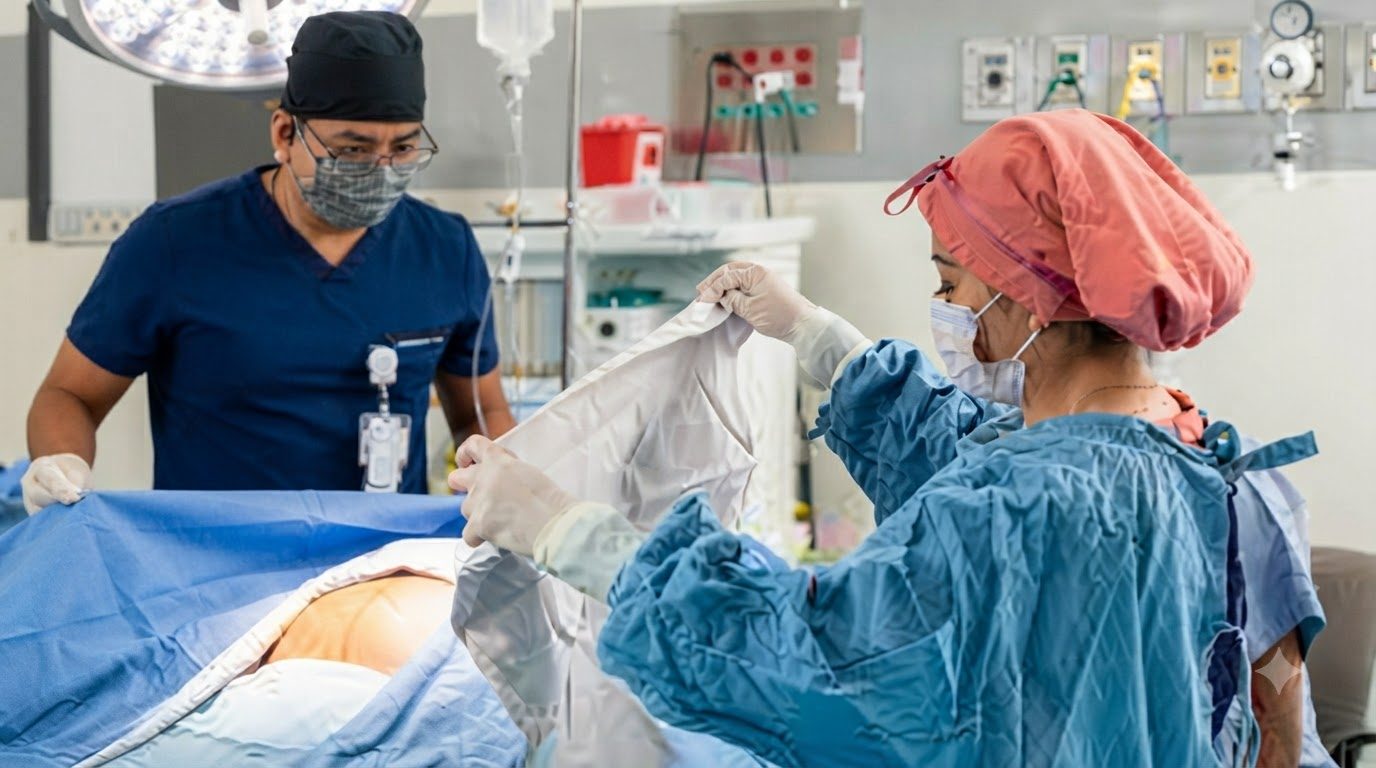
Knowing the sequence dissolves most of the fear. Preparation (10–15 minutes): the spinal is placed sitting up — a sting, then warmth and numbness spreading down; monitors on; catheter placed; the sterile drapes go up, and the mother sees her team’s faces over the screen. The delivery (5–10 minutes): pressure and pulling sensations — not pain — as the baby is lifted out; the first cry within seconds of birth; the baby shown to the mother across the drape, then assessed beside by our team while the operation continues; the partner (present where protocols allow) accompanies the baby for weighing and the first checks. The repair (20–30 minutes): the uterus, then the layers, closed; the skin finished with stitches or staples. Recovery: a monitored hour — shivering and nausea are common and treated — then the ward, where the baby is already waiting for the first feed with a nurse helping position it around the incision. The whole theatre episode, arrival to recovery: about an hour and a half of a lifetime that families remember for all of it.
Pain control after caesarean — modern, scheduled, sufficient
The fear behind “caesarean recovery” is usually pain fear — and it deserves a modern answer. Our protocol layers it: the long-acting component placed during anaesthesia covers the first hours; scheduled round-the-clock pain medicine follows for days (taken on the clock, not on crying — the lesson every nurse enforces); additional doses handle the breaks; and non-drug measures (early walking, support when coughing or laughing, proper feeding positions) do the quiet work. By day three most mothers describe discomfort rather than pain; by discharge, the tablets are being forgotten rather than counted. What makes the difference is that pain control here is treated as a right with a schedule, not a virtue with a threshold — mothers who hurt do not “tough it out”; they tell the nurse and receive the next dose. Recovering mothers who sleep, walk and feed their babies heal faster — the medicine and the mother agree on this.
The caesarean scar — care, healing and the long view
The low transverse scar heals by weeks and fades by years: red and firm in the first months, pale and soft by the end of year one. Care is simple — keep it clean and dry, watch for the infection signs (increasing redness, discharge, fever) that mean call us, and expect the numbness around it: the nerves take months to a year to reconnect, and restored sensation can prickle as it returns. Keloid-prone skin deserves early mention at follow-up so treatment starts early. The uterus’s scar is the more important one: it carries the future-pregnancy rules — spacing of at least 18–24 months, early registration next time, scar and placenta monitored by ultrasound, and honest VBAC assessment where the situation allows. Two or three caesareans is the prudent lifetime ceiling; the family that plans with this arithmetic avoids the emergencies that exceed it.
Elective vs emergency — the two different days
The same operation wears two moods. Elective: the pathway above — calm, scheduled, the family briefed, the theatre expecting them; outcomes at their statistical best. Emergency: the same operation compressed into urgency — foetal distress or labour complications converting the day’s plan; families experience the speed as frightening, and the speed is the point: minutes protect the baby’s brain and the mother’s safety. What stays identical: the sterile discipline, the anaesthesia standards, the team’s roles, the consent obtained verbally in the rush and completed in writing after, and the same surgeon’s explanation to the family as soon as the baby is safe. We tell families during antenatal visits that roughly a fifth of planned normal deliveries end in emergency caesareans nationally — so the possibility is discussed before labour, not sprung during it. The family that has mentally rehearsed both paths meets whichever arrives with steadier hearts.
Need a consultation or second opinion?
Book your appointment online or call us directly — our team will confirm your slot within minutes.