
Hysterectomy
Hysterectomy in Bokaro Steel City — when it is needed, how it is done, and what recovery looks like
A hysterectomy is the surgical removal of the uterus (womb). Hearing the word can be frightening, so let us be clear from the start: at Surgy Centre, Bokaro Steel City, a hysterectomy is recommended only when medicines, minor procedures and conservative options have genuinely failed or are unsafe — for example with large fibroids causing heavy bleeding, severe pain, uterine prolapse, or pre-cancerous changes. Dr. K. K. Das has performed gynaecological surgery here since 1977, and our counselling-first approach means every woman and her family understand exactly why the operation is advised, what will change afterwards, and what will not.
This page explains the conditions that lead to hysterectomy, the three surgical routes we use, recovery expectations, and the honest facts about life after the operation. For an individual opinion, book an OPD consultation on 88770 88770 / 73710 50505.
Conditions that may require hysterectomy
Importantly, many conditions above are first treated without removing the uterus — with medicines, hormonal IUDs, hysteroscopic polyp or fibroid removal, or laparoscopic procedures. When you consult us, expect a full discussion of these alternatives first.
Types of hysterectomy — and what is removed
The three surgical routes — and how we choose
Abdominal hysterectomy
A horizontal bikini-line cut gives the surgeon the widest access. Chosen for very large fibroids, previous multiple surgeries, or when other pelvic structures need attention. Recovery is the slowest of the three routes.
Vaginal hysterectomy
The uterus is removed through the vagina with no abdominal cut at all — the preferred route for prolapse and a good option for moderately sized uteri. Pain is least, recovery fastest, and there is no visible scar.
Laparoscopic (keyhole) hysterectomy
Through small abdominal cuts plus the vagina, the uterus is detached with a camera guiding the surgeon. Best for many fibroid and bleeding cases where the uterus is not enormous. Faster recovery than open surgery, with tiny scars.
At Surgy Centre the route is chosen for your anatomy and safety, not for convenience — and the reasoning is explained before consent.
Your hospital journey with us — step by step
Life after hysterectomy — honest answers to the real worries
Periods: they stop permanently — for women whose bleeding was the problem, this is usually a relief rather than a loss. Pregnancy: is no longer possible; if your family is not complete, we will discuss this before any operation and explore alternatives. Sexual life: sensation and desire are not reduced by removing the uterus; most couples resume after about six weeks with the same or better comfort, since pain and bleeding are gone. Hormones and menopause: if the ovaries are left in place — as they almost always are with us — you will not enter menopause early. Weight and appearance: no hormonal weight gain is caused by hysterectomy itself; a balanced diet and walking after recovery matter far more. Femininity: the uterus does not define it — our patients will tell you the same.
Risks, stated plainly
As with any major operation, risks include bleeding, infection, injury to bladder or bowel (uncommon, recognised and repaired during surgery if it occurs), clots in the legs, and anaesthesia-related complications. Our pre-operative checks, sterile OT workflow and early-mobilisation protocols exist precisely to minimise these. For prolapse surgery, we explain the small chance of recurrence and the role of pelvic-floor exercises afterwards.
Costs and insurance
The cost depends on the route (vaginal and laparoscopic usually cost more than open in consumables but save hospital days), room category and length of stay. A written estimate is provided before admission and honoured at discharge — a commitment our patients from Bokaro, Chas and Dhanbad mention most often in their reviews. Reimbursement paperwork is supported by our accounts desk; call us with your policy details to confirm the process.
Book a confidential consultation
Discuss your reports, symptoms and fears without rush. Surgy Centre, 225 Cooperative Colony, Bokaro Steel City, Jharkhand 827001. OPD Monday–Saturday 9 AM–12 PM and 3–6 PM. Call 88770 88770 / 73710 50505, or book online. Related reading: Breast lump care · Cytology & Pap smear · All treatments.
Before hysterectomy — the alternatives we genuinely try first
Because a hysterectomy ends menstruation and fertility permanently, our first obligation is to make sure simpler answers have had their chance. Medical options: tranexamic acid and NSAIDs for heavy bleeding; hormonal treatment including the levonorgestrel IUD, which shrinks bleeding dramatically for many fibroid and adenomyosis patients; iron correction that makes bleeding tolerable while cause is treated; GnRH-analogue short courses in specific situations. Procedural options: hysteroscopic polypectomy for cavity polyps; hysteroscopic or laparoscopic myomectomy to remove fibroids while keeping the uterus — the right path for women who still want children; uterine artery approaches in selected centres. The honest exceptions: when bleeding has already caused dangerous anaemia, when the uterus is enormous, when prolapse is severe, or when pre-cancer demands removal — alternatives become risks, and hysterectomy becomes the conservative choice. The consultation walks this ladder openly: what we have tried, what remains, and where the ladder should stop for you.
The operation day — what the family sees
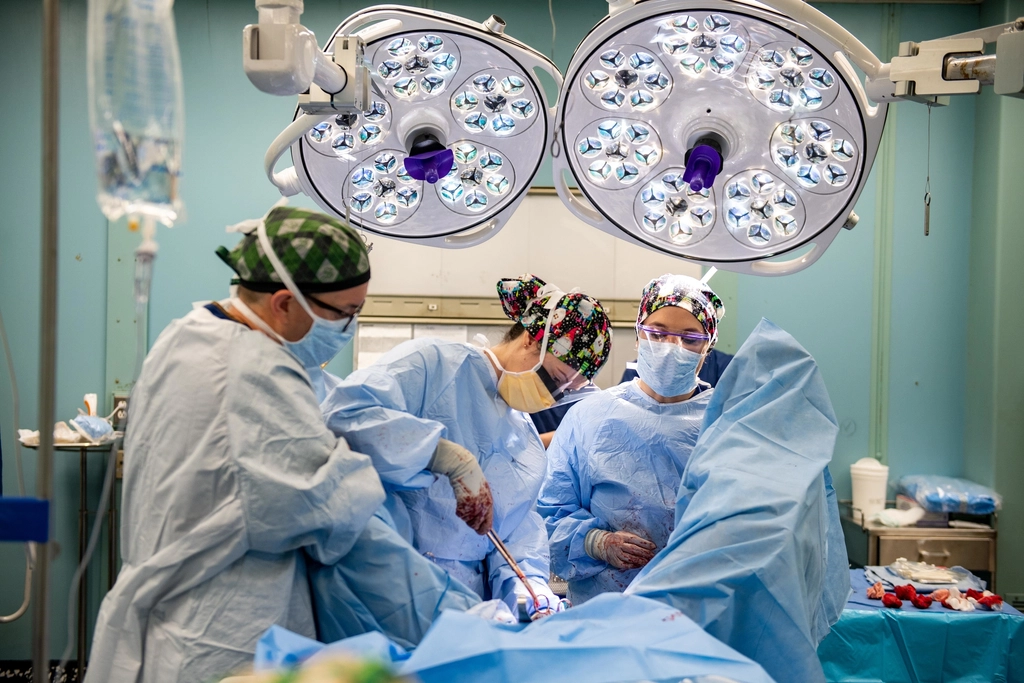
Admission in the morning; the anaesthetist’s final check; the surgeon marks the plan and answers last questions. The operation itself runs one to two hours depending on route; the family waits in the designated area with their phones on — updates come from the team at every milestone. After theatre, the patient recovers in monitored beds: pain protocol running, fluids until gut sounds return, catheter removed as early as safe. The surgeon speaks to the family the same day — what was found (sometimes surprises: endometriosis, adhesions, unexpected fibroid positions), how it went, and what tomorrow looks like. Tissue removed goes to histopathology as routine; the report arrives in days and is discussed at follow-up. This rhythm — operation, same-day briefing, pathology, review — is how a frightening word becomes a managed event.
Recovery timeline — week by week
Emotional recovery — the conversation many families need
The uterus carries meanings far beyond anatomy — motherhood’s chapters, womanhood’s definitions, quiet griefs never spoken. Our counselling names this honestly: ambivalence after hysterectomy is common even when the decision was clearly right; mood dips share physiology with surgical stress; and partners sometimes carry unspoken worries they cannot articulate. Discharge counselling covers this openly, partners are included in the conversation, and follow-up screens for persistent low mood as routinely as it checks wounds. Women who feared “losing femininity” consistently report the opposite at six weeks — freedom from bleeding and pain rearranges the emotional books quickly. Where a patient’s distress runs deeper, we treat it as medicine requires, not as an embarrassment.
Questions about ovaries — the detailed answer
Ovarian conservation is our default at hysterectomy for benign disease: keeping healthy ovaries avoids surgical menopause and its cardiovascular and bone consequences. When oophorectomy is considered — family history of ovarian cancer, endometriosis involving the ovaries, or pathology found on table — the discussion includes hormone replacement options and timing by age. Rarely, surgery uncovers findings that change the plan intra-operatively; in those moments the family is informed where minutes allow, and decisions follow the pre-discussed priorities. The message to carry: ovaries are not removed casually here, and if yours are removed, you will have been part of that decision, informed and in writing.
Need a consultation or second opinion?
Book your appointment online or call us directly — our team will confirm your slot within minutes.